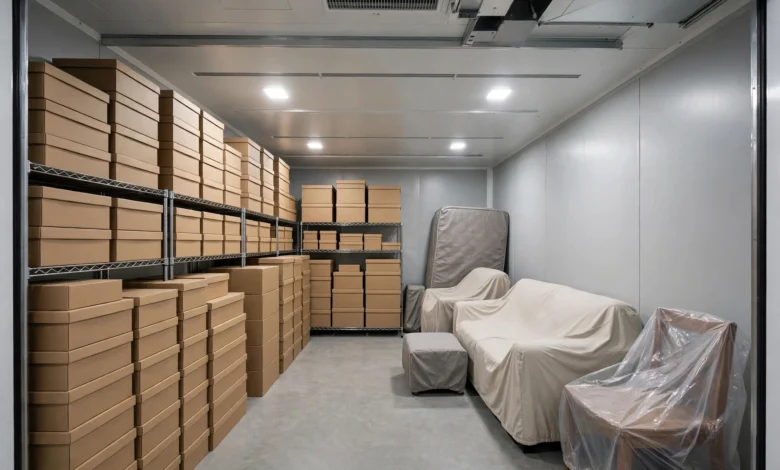
Climate controlled storage is a storage unit kept at a steady temperature — typically 55°F to 85°F — and, in the better units, a controlled humidity level as well. It protects wood furniture, electronics, documents, photographs, musical instruments, and anything else that warps, cracks, fades, or grows mold when temperatures swing and humidity climbs. Expect to pay roughly 10–50% more per month than a standard unit of the same size — often an extra $20–$50 a month — and always ask whether a unit controls humidity, not just temperature, because the two are not the same thing.
If you are searching for climate controlled storage near you, this guide explains exactly what the term means, what it costs in 2026, which belongings actually need it, and how to choose a facility without overpaying.
At a Glance — Climate Controlled Storage Near Me
- What it is: A unit with HVAC (and sometimes dehumidification) holding temperature steady, typically 55–85°F, year-round.
- Humidity: The best units hold relative humidity around 45–55%. Many “climate controlled” units only manage temperature — ask before you rent.
- Cost: Typically 10–50% more than a standard unit of the same size; a climate controlled 10×10 averaged about $130/month in Jacksonville in June 2026 vs. $111 for a standard 10×10, according to StorageCafe data cited by local guides.
- Worth it for: Wood furniture, antiques, electronics, paper records, photos, instruments, mattresses, artwork, and anything stored in a hot or humid climate or for more than a few months.
- Skip it for: Short-term storage of durable items (metal tools, plastic bins, garden equipment) in mild climates.
- Key question to ask: “Do you control humidity as well as temperature, and what range do you hold?” Get the answer in writing.
What Is Climate Controlled Storage?
A standard storage unit is essentially a metal box: no heating, no cooling, no humidity control. Its temperature follows the weather outside. On a hot summer day, the inside of a standard unit can reach 110–120°F, according to facility operators in warm climates. In winter it can drop near freezing. Humidity inside tracks the outdoor air too, which in humid regions means months of damp conditions.
A climate controlled unit changes that. HVAC equipment heats and cools the space to hold it within a set range, and in units with true climate control, a dehumidifier — or the air conditioning system’s own condensation cycle — pulls excess moisture out of the air. The units are usually fully enclosed and insulated, with sealed doors and vapor barriers that keep outside air from leaking in the way it would around a garage-style roll-up door.
The standard temperature range is about 55°F to 85°F, though some facilities hold a narrower band such as 50–80°F. The point is not to keep your belongings at a comfortable room temperature — it is to keep them away from the extremes. Wood, paper, leather, vinyl, and electronics all degrade faster when temperatures swing widely or sit high for weeks at a time.
Climate controlled vs. temperature controlled vs. humidity controlled
These terms are used loosely in the storage industry, and the differences matter:
- Temperature controlled: Heating and sometimes cooling hold the temperature in a set range. Humidity is not directly managed.
- Climate controlled: Usually means temperature control plus some humidity management — but not always. Some facilities use the term for temperature-only units.
- Humidity controlled: Regulates both temperature and humidity, typically holding relative humidity below 60% and often in the 45–55% range. These units cost the most and are most common in humid southern regions.
Before you rent, ask the facility exactly what is controlled and what range it holds. If the answer is vague, that is a warning sign. The distinction matters most in humid climates, where moisture — not heat — is the main threat to stored belongings.
Why Does Humidity Matter So Much?
Because mold and moisture damage are the quiet destroyers of stored belongings. The U.S. Environmental Protection Agency (EPA) advises keeping indoor relative humidity below 60 percent — ideally between 30 and 50 percent — to limit mold growth, and notes that the key to mold control is moisture control. The EPA also advises drying wet materials within 24 to 48 hours to prevent mold from taking hold.
Inside a standard storage unit in a humid climate, relative humidity can sit above 60% for weeks. That is enough for mold to grow on fabric, paper, leather, and wood; for wooden furniture to swell, warp, and loosen at the joints; for photographs to stick together; and for metal to corrode. Heat makes it worse: warm air holds more moisture, and warm, damp conditions accelerate nearly every kind of deterioration.
This is why climate control is most valuable in hot, humid regions — the southeastern United States, the Gulf Coast, and anywhere summers combine heat and humidity — and for long-term storage anywhere, where even moderate seasonal swings add up over months.
What Items Need Climate Controlled Storage?
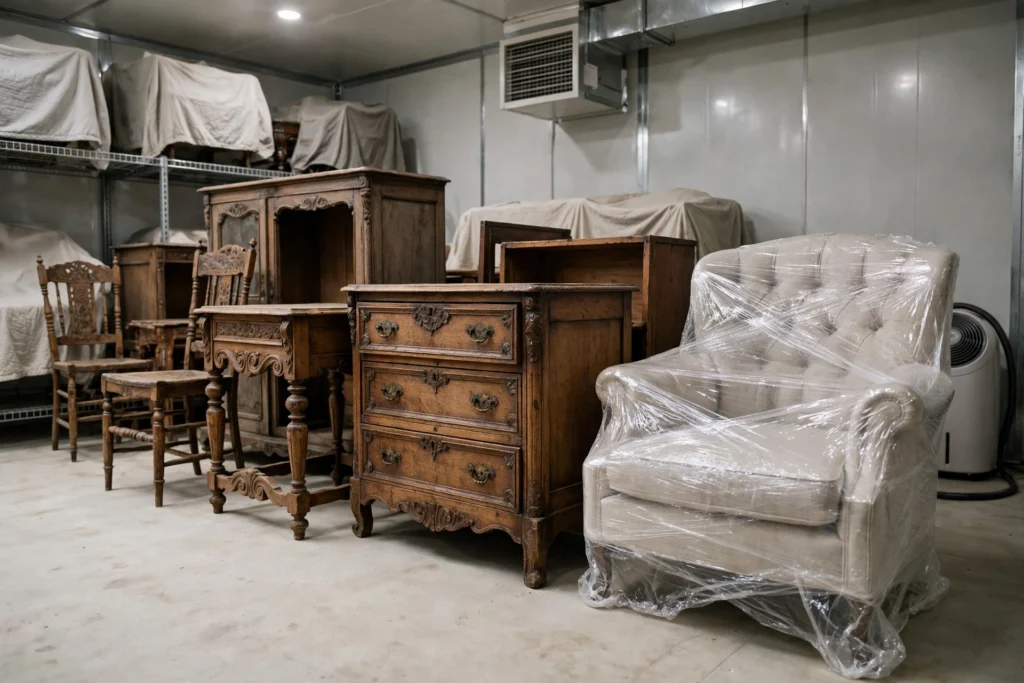
Not everything needs it. Here is a practical breakdown.
Definitely use climate control for:
- Wood furniture and antiques — Wood swells and shrinks as humidity rises and falls; joints loosen, veneer lifts, and finishes crack.
- Electronics — Heat and humidity corrode circuits and damage batteries and screens.
- Paper records, books, and photographs — Paper yellows and grows mold; photographs stick together and fade.
- Musical instruments — Wooden instruments are especially sensitive to humidity swings.
- Mattresses and upholstered furniture — Fabric and foam absorb moisture and grow mold and mildew.
- Artwork and collectibles — Paint, canvas, and frames are all vulnerable to humidity and heat.
- Leather goods and clothing — Leather cracks in dry heat and mildews in damp conditions.
- Vinyl records and media — Heat warps vinyl; humidity damages tapes and discs.
- Wine — Wine needs stable, cool temperatures; a standard unit will ruin it.
A standard unit is usually fine for:
- Metal tools and equipment — Durable, though a light oil coating helps in humid areas.
- Plastic bins and outdoor furniture — Built to handle weather.
- Garden equipment — Mowers, hoses, and pots tolerate temperature swings.
- Seasonal décor in sealed containers — Short-term storage of hardy items.
- Anything stored for a few weeks in a mild climate — Short exposure to moderate conditions rarely causes damage.
The deciding factors are what you are storing, how long you are storing it, and where you live. Valuable or sensitive items, storage longer than a few months, and hot or humid climates all point toward climate control.
How Much Does Climate Controlled Storage Cost?
Climate controlled units cost more than standard units — the industry generally quotes a premium of roughly 10–50%, depending on the market, the facility, and the unit size. In practical terms, that is usually an extra $20–$50 a month.
To ground that in real numbers: StorageCafe data cited by local guides shows a climate controlled 10×10 unit in Jacksonville, Florida averaging about $130 a month in June 2026, against $111 for a standard 10×10 — a premium of about 17%, or roughly $19 a month. In New York City, climate controlled units averaged around $261 a month versus $236 for standard units citywide, according to one operator’s 2026 data. In Dallas, one operator listed climate controlled units from $22 a month for a 5×5 to $62 a month for a 10×10 ground-level unit as of March 2026 — though those were promotional rates, and street rates vary widely by neighborhood and season.
Typical monthly ranges by unit size (national averages, 2026 — your market may differ):
| Unit size | Fits roughly | Standard unit | Climate controlled |
|---|---|---|---|
| 5×5 | Boxes, a chair, seasonal items | $30–$55 | $45–$75 |
| 5×10 | A studio’s boxes, a small sofa | $50–$80 | $70–$110 |
| 10×10 | A one-bedroom apartment | $80–$130 | $110–$175 |
| 10×15 | A two-bedroom apartment | $110–$160 | $150–$220 |
| 10×20 | A three-bedroom house | $150–$220 | $200–$300 |
These are broad ranges, not quotes. Prices vary sharply by city, neighborhood, and season, and many facilities run move-in promotions — a free first month or 50% off for the first few months — that can offset the climate control premium at the start. Always confirm the regular rate that applies after the promotion ends, and ask whether the rate is locked for any period or can rise at renewal.
How to Find Climate Controlled Storage Near You
Search with the right terms
Search “climate controlled storage near me” in Google Maps or your map app, and filter for climate control specifically — many listing sites let you filter by unit features. Check the facility’s own website rather than relying on aggregator listings alone: the facility’s site will usually state whether units are climate controlled and what temperature range they hold.
Visit before you rent
A facility visit tells you things no listing can. Walk the halls: a climate controlled building should feel noticeably moderate in temperature, not stifling or freezing. Look for sealed, insulated doors on the units rather than open roll-up doors to the outside. Ask to see the actual unit you would rent, not a model. Check for signs of water damage, musty smells, or pest evidence in the hallways — a climate controlled building should smell clean and dry.
Ask these questions
- What temperature range do you hold, and is it monitored? A good facility can give you a number, not just “it’s climate controlled.”
- Do you control humidity, and to what level? This is the question that separates real climate control from temperature-only units.
- Is the unit indoors or outdoors? True climate controlled units are almost always inside a building. A drive-up unit with a roll-up door is unlikely to be genuinely climate controlled.
- What happens if the HVAC fails? Ask whether the system is monitored and how quickly failures are addressed.
- What is the regular rate after any promotion? Promotional pricing is common; know what you will pay in month four.
- Is there insurance, and what does it cover? Many facilities offer storage insurance. Note that renters insurance may cover items in storage against theft and sudden weather damage, but usually not against mold, mildew, or gradual deterioration — another reason climate control matters.
Location and access
Choose a facility close enough that you will actually use it. If you are storing items you will need to reach — seasonal clothes, business inventory, documents — a facility ten minutes away beats a cheaper one forty minutes away. Check access hours: some climate controlled buildings have limited hours or require appointments for after-hours access. Also check whether the building has an elevator if your unit is not on the ground floor, and whether carts or dollies are available.
How to Pack for Climate Controlled Storage
Climate control protects your belongings, but good packing protects them further:
- Clean everything before storing it. Dirt and food residue attract pests and feed mold. Wipe down furniture, wash fabrics, and make sure nothing goes in damp.
- Use plastic bins, not cardboard, for anything moisture-sensitive. Cardboard absorbs humidity even in a climate controlled unit.
- Leave space between items and walls. Air circulation prevents trapped moisture. Leave a small gap around the edges of the unit and between large items.
- Wrap wood furniture in breathable covers, not plastic sheeting, which can trap condensation.
- Stand mattresses on their side in a breathable mattress bag, and do not stack heavy items on upholstered furniture.
- Label everything. You will thank yourself in six months.
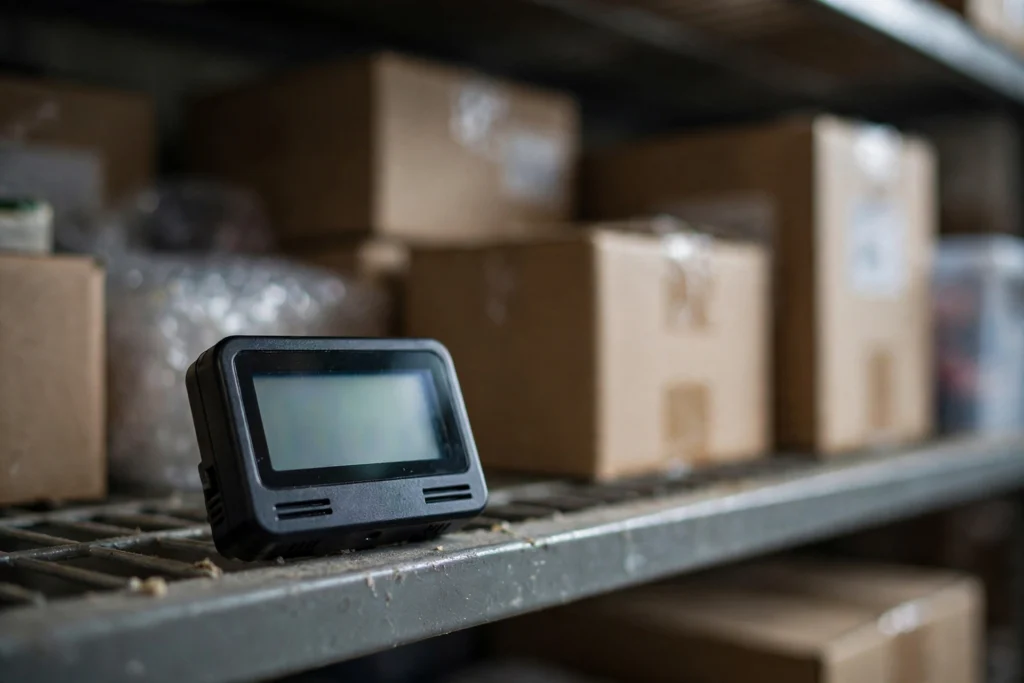
- Put a small hygrometer in the unit if you are storing valuable items long-term. A basic digital hygrometer costs roughly $10–$50, and it tells you whether the facility is actually holding the conditions it promises.
Climate Control at Home: The Same Principles Apply
The same temperature and humidity principles that protect stored belongings apply to your home. If your house struggles with humidity in summer, a ductless mini-split system can help — our guide to mini split heat pumps explains how these efficient systems heat and cool individual rooms, which is the same targeted approach that makes climate controlled storage work. And the EPA’s guidance on indoor humidity — below 60%, ideally 30–50% — is the same target whether the space is a living room or a storage unit.
Frequently Asked Questions
What temperature is a climate controlled storage unit kept at?
Most climate controlled storage units are kept between 55°F and 85°F year-round, though some facilities hold a narrower range such as 50–80°F. Ask the facility for its specific range before renting.
Is climate controlled storage worth the extra cost?
It depends on what you are storing. For wood furniture, electronics, documents, photographs, instruments, and anything valuable stored for more than a few months — especially in a hot or humid climate — the extra $20–$50 a month is usually worth it. For durable items stored short-term in a mild climate, a standard unit is fine.
What is the difference between climate controlled and temperature controlled storage?
Temperature controlled storage manages temperature only. Climate controlled storage usually manages temperature and humidity, but some facilities use the term for temperature-only units. Humidity controlled storage regulates both. Always ask what a facility actually controls.
Do I need climate controlled storage for furniture?
For wood furniture, antiques, and upholstered pieces, yes — especially for storage longer than a few months or in a humid climate. Wood swells and shrinks with humidity changes, joints loosen, and fabric absorbs moisture and grows mold. Metal and plastic outdoor furniture does not need it.
How much more does climate controlled storage cost?
Typically 10–50% more than a standard unit of the same size, or roughly $20–$50 extra per month. For example, a climate controlled 10×10 averaged about $130/month in Jacksonville in June 2026 versus $111 for a standard 10×10, according to StorageCafe data.
Can mold grow in a climate controlled storage unit?
It is much less likely than in a standard unit, but it is not impossible — especially if items go in damp or dirty, or if the facility’s humidity control is weak. Clean and dry everything before storing, use plastic bins for sensitive items, and leave space for air circulation.
Sources: U.S. Environmental Protection Agency guidance on indoor humidity and mold (EPA Mold Course, Chapter 2); pricing data from StorageCafe as cited by local storage guides, June 2026. Prices vary by market and season — confirm current rates with the facility. As of November 2026.