
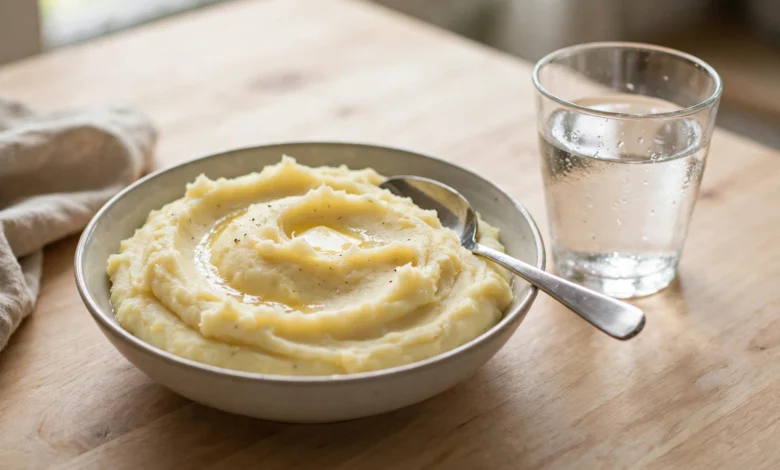
After wisdom teeth removal, eat only soft or liquid foods — such as yogurt, applesauce, mashed potato, and lukewarm soup — for the first 24 hours, then move to semi-soft foods as you can tolerate them, avoiding anything hard, crunchy, spicy, or hot for at least a week. Most people return to a normal diet within 10–14 days.
Important: This article is general information only and is not medical advice. Always follow the specific instructions your dentist or oral surgeon gave you — they know your mouth and your procedure. If anything here conflicts with their advice, their advice wins.
At a Glance: Eating After Wisdom Teeth Removal
| Stage | When | What to eat | What to avoid |
|---|---|---|---|
| First hours | Until numbness wears off (usually 2–4 hours) | Nothing — wait until feeling returns so you don’t bite your cheek | Hot food and drink while numb |
| First 24 hours | Day 0–1 | Cool or lukewarm soft foods: yogurt, applesauce, smoothies (from a cup, not a straw), mashed potato, broth | Straws, alcohol, caffeine, carbonated drinks, hot drinks, hard or crunchy food |
| Days 2–3 | Day 2–3 | Soft foods: scrambled eggs, oatmeal, soft pasta, cottage cheese, ripe banana, avocado | Nuts, seeds, popcorn, chips, spicy food, smoking |
| Days 4–7 | First week | Semi-soft foods: well-cooked pasta, soft fish, steamed vegetables, meatballs, soft bread | Anything crunchy, chewy, or sharp |
| Week 2 | Days 8–14 | Gradually reintroduce normal foods as comfort allows | Hard or very chewy foods |
| Weeks 3–4 | Week 3+ | Most people are back to a normal diet | — |
Why Does What You Eat Matter After Wisdom Teeth Removal?
When a wisdom tooth is removed, a blood clot forms in the empty socket. That clot is the foundation of healing: it protects the bone and nerves underneath and gives new tissue something to grow into. Almost every food rule after extraction exists to protect that clot.
If the clot is dislodged or dissolves too early, the bone is left exposed — a painful condition called dry socket. The NHS describes it as a painful condition where the blood clot does not form properly or is dislodged before the gum has healed. The Mayo Clinic notes that dry socket is the most common complication following wisdom tooth removal, with pain typically beginning one to three days after the procedure. Cleveland Clinic estimates it affects roughly 2% to 5% of tooth extractions.
Suction (from straws, smoking, or vigorous spitting), hard or sharp food, and very hot food and drink are the main threats to the clot in the first few days. Eating the right foods at the right time is therefore not just about comfort — it helps prevent complications.
What Can I Eat in the First 24 Hours?
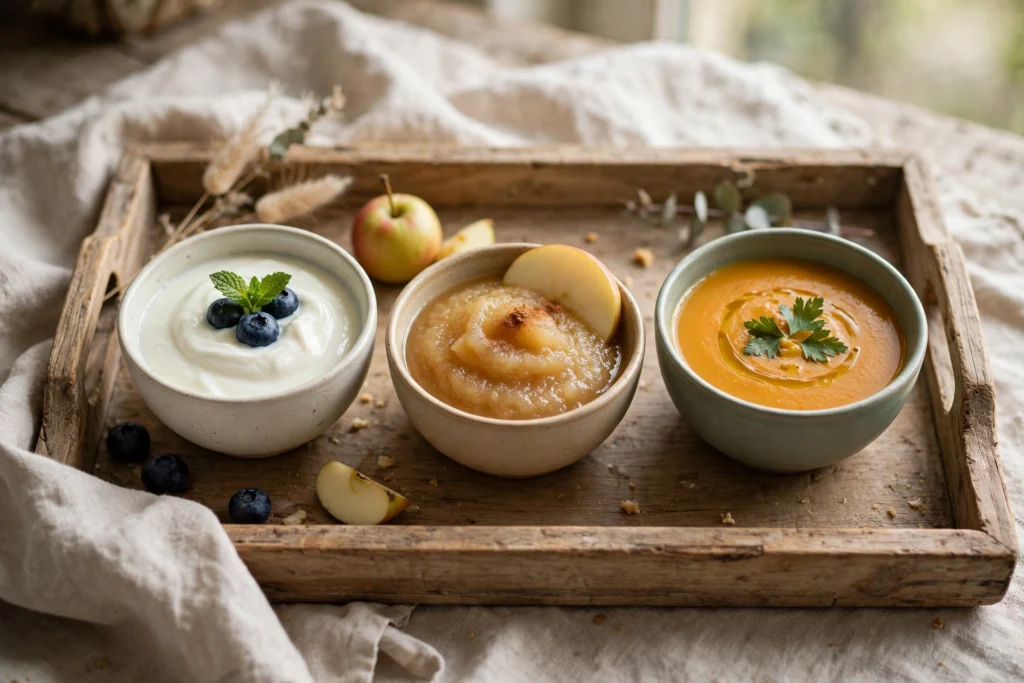
The first day has the strictest rules, and the shortest menu. The Mayo Clinic advises eating only soft foods, such as yogurt or applesauce, for the first 24 hours after wisdom tooth removal. The NHS gives the same core advice: eat soft or liquid food until you can chew more comfortably.
Good first-day choices:
- Plain or lightly sweetened yogurt
- Applesauce
- Mashed potato (cooled to lukewarm)
- Smooth, blended soup or broth, served lukewarm — never piping hot
- Smoothies from a cup (never through a straw)
- Pudding, custard, or gelatin dessert
- Ice cream or frozen yogurt (the cold can soothe a sore jaw)
- Milk, water, and protein shakes drunk from a cup
First-day rules:
- Wait until the numbness wears off before eating anything, so you don’t accidentally bite your cheek, lip, or tongue. For most people this takes two to four hours.
- Keep everything cool or lukewarm. Hot food and drink can increase bleeding and scald a numb mouth.
- Do not use a straw — not on day one, and not for at least a week. The Mayo Clinic is explicit: do not drink with a straw for at least a week, because the sucking action can pull the blood clot from the socket.
- Avoid alcohol, caffeine, and carbonated drinks for the first 24 hours, as the Mayo Clinic advises.
- Do not rinse, spit, or brush near the socket for the first 24 hours. After that, the Mayo Clinic recommends gently rinsing with warm salt water several times a day for a week — half a teaspoon (2.5 ml) of table salt in 8 ounces (237 ml) of water.
What Should I Eat on Days 2–3?
By day two the clot is more stable, but swelling and jaw stiffness typically peak around days two to three. This is the stage for soft foods that need little chewing.
Good choices for days 2–3:
- Scrambled eggs
- Oatmeal, well cooked and cooled to lukewarm
- Mashed sweet potato
- Cottage cheese or ricotta
- Ripe banana and avocado, mashed or sliced
- Hummus
- Soft-cooked pasta or noodles
- Flaky fish such as cod or salmon
- Well-blended lentil or vegetable soup
- Macaroni and cheese
Still avoid: anything hard, crunchy, sharp, or chewy; nuts, seeds, popcorn, and rice, which can lodge in the socket (the NHS specifically warns against food that could get stuck in the wound, such as nuts or seeds); spicy food; and smoking, which the NHS notes increases the risk of infection. Mayo Clinic advises no smoking for at least 72 hours after surgery.
What Can I Eat During the First Week?
From around day four, most people can widen the menu to semi-soft foods — anything that yields easily to a fork. The Mayo Clinic frames this stage as starting foods that need little chewing once you feel ready, while avoiding hard, chewy, hot, or spicy foods.
Good choices for days 4–7:
- Well-cooked pasta with a soft sauce
- Soft pancakes or French toast
- Meatballs or meatloaf, cut small
- Shepherd’s pie or cottage pie
- Steamed or boiled vegetables, cooked until very soft
- Soft bread (crusts removed) with soft fillings
- Tofu, silken or soft
- Baked beans
By the end of the first week, swelling should be easing and your jaw should be opening more freely. The NHS notes that pain and swelling after wisdom tooth removal usually start to improve after one or two days, but can last for up to two weeks.
When Can I Eat Normally Again?
Most people return to a normal diet within 10–14 days, though the timeline varies with the complexity of the extraction. Simple extractions may only need a few days of soft eating; surgical removal of impacted lower wisdom teeth can mean a longer recovery.
- Week 2: Reintroduce easy-to-chew foods — sandwiches on soft bread, cooked chicken, pasta dishes, cooked vegetables. Add one new texture at a time.
- Weeks 3–4: Crunchy and chewy foods — toast, potato chips, raw vegetables, nuts, steak — are usually fine again once the socket has closed over and chewing is comfortable.
Best Soft Foods After Wisdom Teeth Removal
| Category | Best choices | Why they work |
|---|---|---|
| Dairy and eggs | Yogurt, cottage cheese, scrambled eggs, milk, pudding | Soft, high in protein and calcium, need almost no chewing |
| Fruit | Ripe banana, applesauce, avocado, stewed fruit, smoothies | Vitamins and fiber without crunch; blend or mash harder fruits |
| Vegetables | Mashed potato, mashed sweet potato, steamed carrots, blended soups | Filling and nutritious; cook until completely soft |
| Grains | Oatmeal, cream of wheat, soft pasta, well-cooked noodles | Energy-dense and easy to swallow |
| Protein | Flaky fish, tofu, hummus, refried beans, soft meatballs | Protein supports healing; choose textures that break apart easily |
| Treats | Ice cream, gelatin dessert, custard, milkshakes (from a cup) | Cold foods can soothe a sore jaw; enjoy in moderation |
What Foods Should I Avoid — and Why?
| Food or habit | Why to avoid it | When it can return |
|---|---|---|
| Straws | Suction can pull the blood clot out of the socket | After at least a week (Mayo Clinic) |
| Nuts, seeds, popcorn, rice | Small hard pieces lodge in the socket and irritate the wound | Weeks 3–4 |
| Chips, crackers, toast, raw vegetables | Sharp or crunchy edges can damage the healing socket | Weeks 3–4 |
| Spicy food | Irritates the wound and can increase pain | After the first week, gradually |
| Very hot food and drink | Can increase bleeding and scald a numb mouth | Once the socket has healed and feeling is normal |
| Alcohol | Interferes with healing and with pain medication | At least 24 hours; longer if you are on medication |
| Carbonated drinks | Carbonation creates pressure that can disturb the clot | After the first 24 hours at minimum |
| Chewy food (steak, bagels, gummy candy) | Requires heavy chewing that strains a sore jaw | Week 2 onwards |
| Smoking and vaping | Suction plus chemicals raise the risk of dry socket and infection | At least 72 hours |
What About Drinks and Hydration?
Staying hydrated matters after surgery, especially if you are eating less than usual. The Mayo Clinic advises drinking a lot of water after surgery. Water is the best choice; milk and diluted juice are also fine.
Avoid alcoholic, caffeinated, carbonated, and hot drinks for the first 24 hours, as the Mayo Clinic advises. Coffee and tea can return after day one, drunk lukewarm rather than hot.
Sample Meal Ideas for a Week of Soft Eating
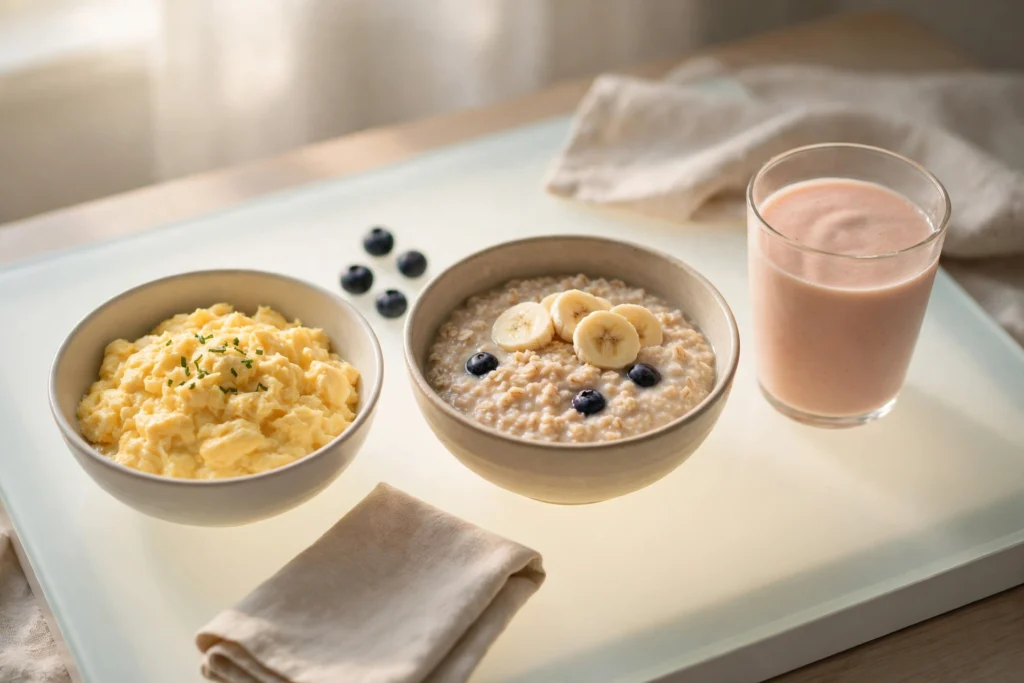
| Day | Breakfast | Lunch | Dinner |
|---|---|---|---|
| Day 1 | Yogurt and applesauce | Lukewarm blended soup | Mashed potato with a little butter |
| Day 2 | Smoothie from a cup (banana, yogurt, milk) | Scrambled eggs with mashed avocado | Soft fish with mashed sweet potato |
| Day 3 | Oatmeal with stewed fruit | Cottage cheese with ripe banana | Macaroni and cheese |
| Day 4 | Oatmeal with honey | Hummus with soft bread (crusts off) | Well-cooked pasta with a smooth tomato sauce |
| Day 5 | Scrambled eggs and soft toast | Lentil soup, well blended | Shepherd’s pie |
| Day 6 | Yogurt with mashed berries | Meatballs in a soft sauce with mashed potato | Steamed salmon with soft-cooked vegetables |
| Day 7 | Pancakes with yogurt | Soft noodles in broth | Soft chicken and vegetable stew |
These are starting points, not a prescription. Adjust for allergies and what your dentist has told you — vegetarians and vegans can swap in tofu, lentils, and plant-based yogurts.
How Do I Get Enough Nutrition on a Soft Diet?
A week of soft food can leave you short on protein and fiber. Prioritize protein at every meal — eggs, yogurt, cottage cheese, fish, tofu, and blended lentils all support tissue healing, and protein shakes drunk from a cup are a useful backup. Blend vegetables into soups rather than skipping them, and include oatmeal, stewed fruit, and avocado for fiber, which helps offset the constipation that painkillers can cause.
Warning Signs: When to Call Your Dentist
Some pain and swelling are normal for up to two weeks, and the NHS notes that they should start to improve after one or two days. Contact your dentist promptly — or, in the UK, NHS 111 — if you notice any of the following:
- Pain that gets worse after day three, rather than better — the classic sign of dry socket. Mayo Clinic describes dry socket pain as typically beginning one to three days after extraction, often severe and sometimes radiating toward the ear.
- A socket that looks empty, or a bad taste or smell in your mouth.
- Bleeding that does not stop. The NHS advises pressing the area for at least 10 minutes with a clean cloth; if bleeding continues, seek urgent help.
- Pain and swelling that are severe or getting worse and are not helped by painkillers.
- Pain with a high temperature, feeling unwell, or a bad taste — possible signs of infection.
If you develop sudden, severe dental pain or swelling outside normal hours, our guide to finding a walk-in emergency dentist near me explains how to get urgent care quickly. For longer-term recovery questions after other dental procedures, see also our article on root canal treatment side effects.
Frequently Asked Questions
What is the best thing to eat right after wisdom teeth removal?
Once the numbness wears off (usually two to four hours), start with cool, soft foods that need no chewing: yogurt, applesauce, mashed potato, or a lukewarm blended soup. The Mayo Clinic advises eating only soft foods for the first 24 hours. Drink water from a cup, and avoid straws, alcohol, and hot drinks on day one.
Can I eat ice cream after wisdom teeth removal?
Yes — ice cream is a popular first-day choice because it is soft and cold, which can feel soothing on a sore jaw. Eat it with a spoon and avoid flavors with nuts or cookie pieces.
When can I eat solid food after wisdom teeth removal?
Most people start semi-soft foods (scrambled eggs, soft pasta, flaky fish) from day two or three, and return to a normal diet within 10–14 days. Crunchy and chewy foods such as toast, potato chips, and nuts are usually best left until weeks three to four.
Why can’t I use a straw after wisdom teeth removal?
Drinking through a straw creates suction in your mouth, which can pull the protective blood clot out of the socket and cause dry socket. The Mayo Clinic advises avoiding straws for at least a week after extraction. Drink smoothies and shakes from a cup instead.
What are the signs of dry socket?
Dry socket pain typically begins one to three days after extraction and gets worse rather than better, often with a throbbing ache that can radiate toward the ear. You may also notice a socket that looks empty, a bad taste, or bad breath. If you suspect dry socket, contact your dentist — it is treatable, but it needs professional care.
Can I drink coffee after wisdom teeth removal?
Not on the first day — the Mayo Clinic advises avoiding hot, caffeinated drinks for the first 24 hours. After that, lukewarm coffee is usually fine, drunk from a cup (never through a straw).
Sources: NHS — Wisdom tooth removal (last reviewed 12 June 2024); Mayo Clinic — Wisdom tooth removal. Both accessed November 2026.
