Bathroom Remodel Near Me: Costs, How to Find a Contractor, and What to Expect in 2026

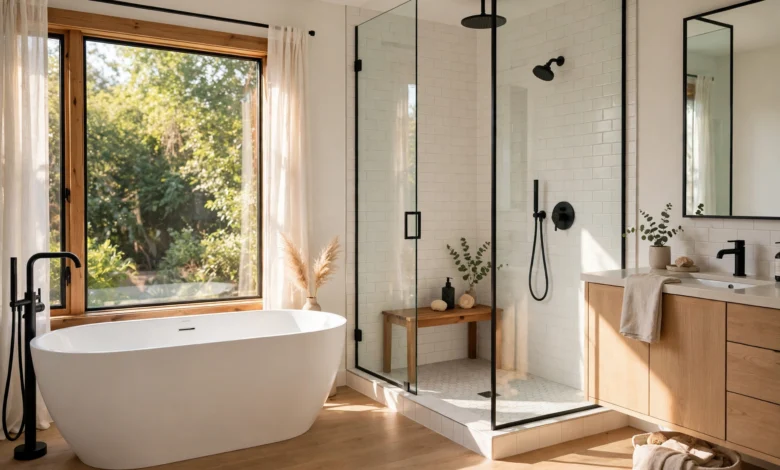
A bathroom remodel near you typically costs a median of $15,000, based on what U.S. homeowners actually spent on bathroom upgrades completed in 2025, according to the 2026 U.S. Houzz Bathroom Trends Study. Major remodels — projects that upgraded at least the shower — ran to a $25,000 median. Your final price depends mostly on the size of the room, whether plumbing moves, and the finishes you choose, so the fastest way to get a real number for your home is to get three written estimates from licensed local contractors for the same scope of work.


At a glance: The median U.S. homeowner spent $15,000 on a bathroom upgrade in 2025 and $25,000 on a major remodel (Houzz, 2026 Bathroom Trends Study), while a standardized midrange remodel cost $26,138 and recouped 80% of its cost at resale (Zonda Cost vs. Value 2025). Most mid-range projects take 4–6 weeks of active construction. Start by defining your scope, then get three written estimates from licensed, insured contractors near you — and never pay the full amount up front.
How Much Does a Bathroom Remodel Cost Near Me?
There is no single national price for a bathroom remodel, because published figures measure different things. The honest way to read them is to know what each number covers:
| Project | Typical cost | What it measures | Source |
|---|---|---|---|
| Any bathroom upgrade | $15,000 median | What homeowners reported spending on 2025 projects | Houzz Bathroom Trends Study 2026 |
| Guest bathroom remodel | $7,000 median | Homeowner-reported spend, 2025 projects | Houzz & Home Study 2026 |
| Primary bathroom remodel | $15,000 median | Homeowner-reported spend, 2025 projects | Houzz & Home Study 2026 |
| Major remodel (shower upgraded) | $25,000 median | Homeowner-reported spend, 2025 projects | Houzz Bathroom Trends Study 2026 |
| Major primary remodel, 100+ sq ft | $30,000 median | Homeowner-reported spend, 2025 projects | Houzz & Home Study 2026 |
| Midrange remodel, defined 5×7 scope | $26,138 | One fixed professional project, priced nationally | Zonda Cost vs. Value 2025 |
| Upscale remodel, defined scope | $81,612 | One fixed luxury project, priced nationally | Zonda Cost vs. Value 2025 |
A few things in that table deserve a closer look. The Houzz figures are medians from homeowner surveys — half of reported projects cost more, half cost less — and they cover whatever each homeowner chose to do, from a vanity swap to a full gut. The 2026 Houzz Bathroom Trends Study surveyed 1,619 U.S. homeowners, and the broader 2026 Houzz & Home Study covered 20,358 respondents, including 10,176 who renovated in 2025. The Zonda Cost vs. Value figures, by contrast, price one tightly defined project (a 5-by-7-foot bathroom with a specified tub, tile, vanity and fixtures), which makes them the better yardstick if you are planning a full professional remodel rather than a refresh.
The spread at the top end is wide: the 90th percentile of primary bathroom remodels reached $50,000 in the Houzz & Home data. That is the world of freestanding tubs, custom glass, heated floors and moved plumbing — and it is a reminder that “average” is a starting point for budgeting, not a quote.
What Drives the Cost of a Bathroom Remodel?
Size of the room. A powder room and a 100-square-foot primary bath are different projects. Houzz’s 2026 data shows major primary remodels at an $18,000 median under 100 square feet and $30,000 at 100 square feet or more. Every extra square foot adds tile, waterproofing, paint and labor.
Whether plumbing and walls move. Keeping the toilet, shower and vanity where they are is the single biggest cost saver in a remodel. Moving a drain or a supply line means opening floors and walls, re-running pipe, and extra inspections. The 2026 Houzz Bathroom Trends Study found that 40% of homeowners reworked the layout of their bathroom — and those are the projects where budgets climb fastest.
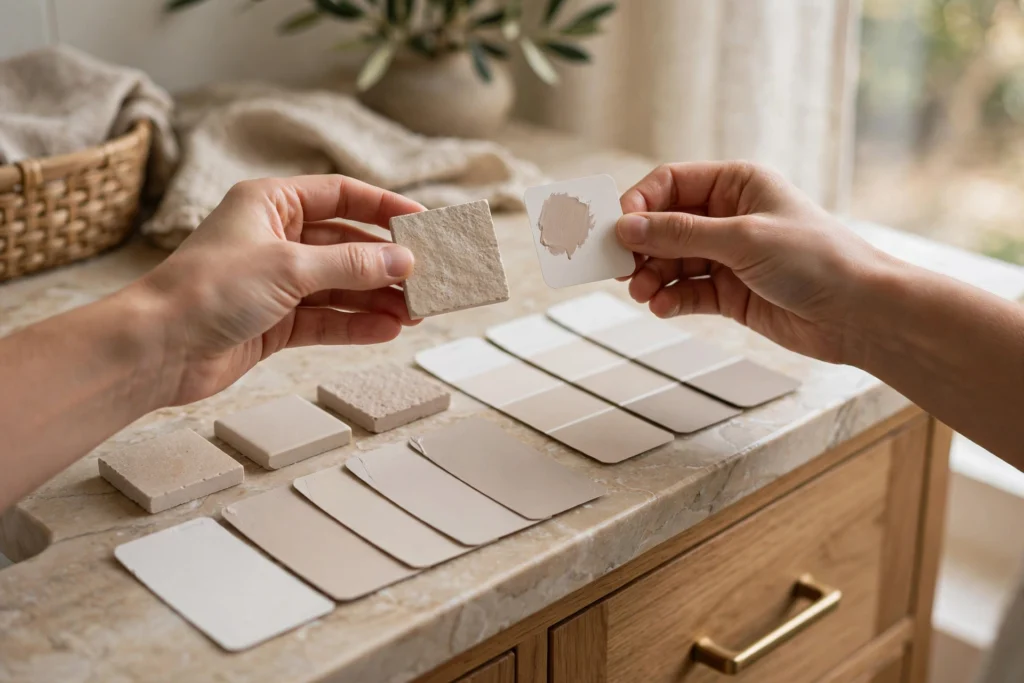
Materials and finishes. Tile alone can swing a budget by thousands of dollars depending on whether you choose ceramic, porcelain or natural stone, and whether the shower gets a standard surround or floor-to-ceiling tile. The same applies to vanities, countertops, faucets and lighting. Decide your finish level before you ask for quotes, or you will be comparing apples to oranges.
The condition behind the walls. Water damage, mold, rotted subflooring and outdated wiring are the classic budget-busters, and none of them are visible until demolition starts. Experienced remodelers build a contingency into the estimate for exactly this reason — and if a contractor’s quote has no contingency line at all, ask where the surprises get paid from.
Labor. Most homeowners hire professionals for this work: Houzz’s 2025 Bathroom Trends Study found that 84% of surveyed homeowners hired a pro for their bathroom renovation. That is sensible — plumbing, electrical and waterproofing mistakes are expensive to fix — but it also means labor is a large share of the total, and local labor rates explain much of the price difference between cities.
How Long Does a Bathroom Remodel Take?
Timeline depends on scope more than anything else. The ranges below reflect the consensus across 2026 timeline guides from remodeling professionals:
| Project scope | Active construction | Total project time (incl. design, permits, ordering) |
|---|---|---|
| Cosmetic refresh (paint, fixtures, hardware) | 1–3 weeks | 3–8 weeks |
| Mid-range remodel, layout unchanged | 4–6 weeks | 6–12 weeks |
| Full gut with layout or plumbing changes | 6–12 weeks | 3–5 months |
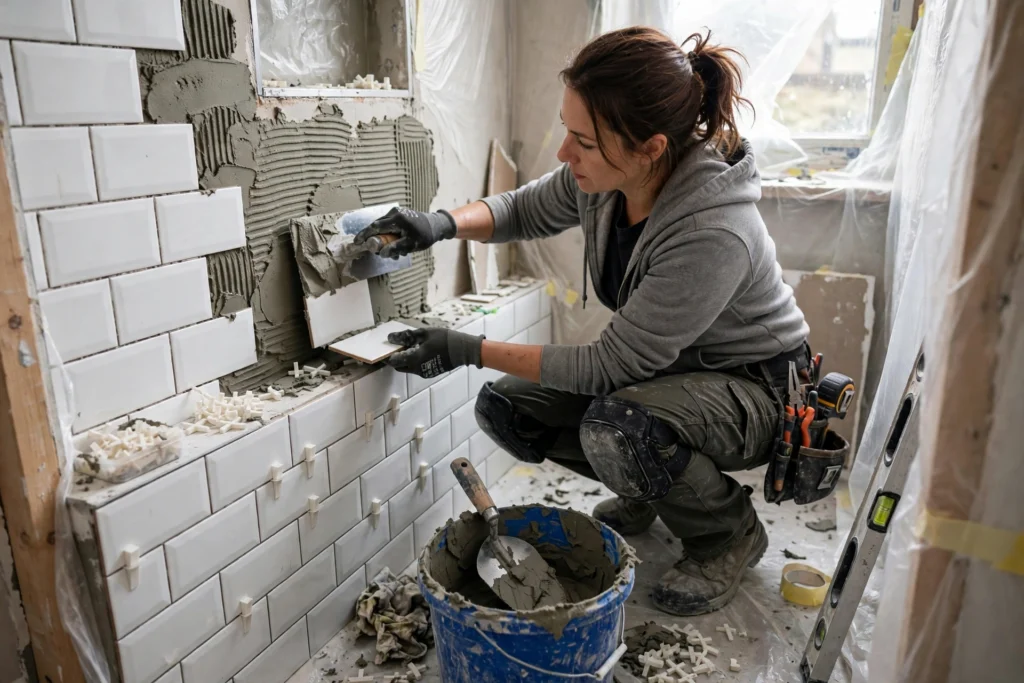
A standard mid-range remodel runs roughly 4–6 weeks on site: demolition and rough plumbing and electrical first, then drywall, tile (usually the longest single phase), then fixtures, paint and the final punch list. The part homeowners underestimate is everything before demolition — design decisions, ordering materials, and waiting on permits can add 2–6 weeks. Custom items such as a made-to-measure shower door add their own lead time after tiling is done.
One practical tip from people who have lived through it: if you only have one bathroom, agree on a written schedule with your contractor before work starts, including what happens if the job runs over. A bathroom you cannot use for an extra two weeks is a bigger problem than a bathroom that costs a little more than planned.
How to Find a Bathroom Remodeler Near You
- Start with referrals, then verify independently. Ask neighbors, friends and coworkers who have had similar work done. Then research each name yourself — the Federal Trade Commission (FTC) advises searching a company’s name online along with words like “scam,” “review” or “complaint,” and checking with your local home builders association and consumer protection officials.
- Check the license and insurance. The FTC says to consider only contractors who are licensed and insured, to confirm the license with your state or county government, and to ask the contractor for proof of insurance. Licensing rules vary by state, so check what your state requires — in California, for example, a license is needed for jobs of $1,000 or more, according to the California Contractors State License Board.
- Get three written estimates for the same scope. Write down exactly what you want done before anyone visits — fixtures, finishes, layout — so each bid prices the same job. The FTC says a written estimate should include a description of the work, materials, completion date and price. If one bid is far below the others, ask why; it can signal cut corners or costs that will appear later as change orders.
- Ask for references and recent work. A reputable remodeler should be happy to share recent local projects and past clients you can call. Drive past a finished job if you can — photos hide a lot.
- Get everything in writing. The FTC recommends a written contract even where your state does not require one. It should list the contractor’s name, address, phone and license number, a detailed description of the work and materials, the total price, a payment schedule, start and finish dates, who handles permits, and any verbal promises. Never sign a contract with blank spaces.
Red Flags When Hiring a Bathroom Contractor
The FTC’s guidance on home improvement scams lists warning signs that are worth memorizing before you hire anyone. Walk away from a contractor who knocks on your door uninvited claiming to be “working in the neighborhood,” offers a discount because of leftover materials from another job, pressures you to decide today, demands full payment up front or cash only, asks you to pull the building permits, or steers you toward a lender they know. The scale of the problem is real: the FTC received 81,925 reports of home improvement fraud in 2024, according to its Consumer Sentinel Network Data Book.
On payment, the FTC’s advice is consistent: keep the down payment modest, make progress payments only as each stage of work is completed, and hold the final payment until the job is done, has passed inspection, and you are satisfied. Pay by check or credit card so there is a record, and avoid cash, wire transfers, gift cards and payment apps. Some states cap how much a contractor can ask for up front — check with your state or local consumer protection office before agreeing to a figure.
It is also worth knowing your cancellation rights. Under the FTC’s Cooling-Off Rule, you generally have three business days to cancel a sale of $25 or more made at your home. If you believe you have been scammed, report it at ReportFraud.ftc.gov or by calling 1-877-382-4357. The FTC also publishes a printable home repair scams guide (PDF) that summarizes the warning signs.
Do You Need a Permit for a Bathroom Remodel?
In most U.S. jurisdictions, yes — if the work touches plumbing, electrical, or the structure of the room. A like-for-like fixture swap usually does not need one; moving a drain, adding a circuit, or removing a wall almost always does. Your contractor should handle the permit application — the FTC lists a contractor asking you to get the permits as a warning sign. Permit fees vary widely by city, so ask your contractor to itemize them in the estimate rather than accepting a vague allowance. Unpermitted work can fail a home inspection when you sell, and in some places it can affect your insurance coverage, so this is not a corner worth cutting.
Is a Bathroom Remodel Worth It?
A midrange bathroom remodel recouped 80% of its cost at resale in the 2025 Zonda Cost vs. Value report — $20,915 of resale value added on a $26,138 job — making it one of the stronger returns among interior projects. An accessible (universal design) remodel recouped 61% ($25,812 on a $42,183 job), while an upscale remodel recouped 42% ($34,000 on an $81,612 job). The pattern is consistent: modest, well-executed bathrooms pay back best, and luxury spending is mostly for your own enjoyment rather than resale.
That said, resale value is only half the calculation. A bathroom is used every single day, and a well-designed one changes how a home feels to live in. If you plan to stay for years, the daily payoff matters more than the resale percentage. If you plan to sell soon, keep the design broadly appealing — neutral tile, a clean vanity, good lighting — and skip the features only you would love.
Before you start, it is worth understanding the plumbing you already have. If your home has older pipework, read our guide on whether a power flush can damage pipes before a remodeler starts work on the system. And if your renovation plans include upgrading the heating or cooling in the room, our mini-split heat pump guide explains a popular option for single-room climate control.
Frequently Asked Questions
How much does a bathroom remodel cost near me?
As of November 2026, the median U.S. homeowner spent $15,000 on a bathroom upgrade and $25,000 on a major remodel, according to the 2026 Houzz Bathroom Trends Study. A standardized midrange remodel costs $26,138 nationally (Zonda Cost vs. Value 2025). Your local price depends on room size, scope, materials and local labor rates — get three written estimates for your specific bathroom.
How long does a bathroom remodel take?
A cosmetic refresh takes 1–3 weeks of construction; a mid-range remodel with the layout unchanged takes 4–6 weeks; a full gut with plumbing or layout changes takes 6–12 weeks. Add 2–6 weeks before construction for design, permits and material ordering. A typical mid-range project runs 6–12 weeks from first meeting to final walkthrough.
Do I need a permit to remodel my bathroom?
Usually yes, if the work involves plumbing, electrical or structural changes. A simple like-for-like fixture replacement typically does not need a permit. Your contractor should obtain the permits — a contractor who asks you to pull them is a red flag, according to the FTC.
How do I find a reliable bathroom remodeler near me?
Start with referrals from people you trust, then verify each contractor independently: confirm the license with your state or county, ask for proof of insurance, check for complaints with consumer protection officials, and get three written estimates for the same scope of work.
What is the most expensive part of a bathroom remodel?
Labor is typically the largest single cost, followed by tile and shower work, the vanity and countertop, and plumbing. Moving plumbing or changing the layout adds the most cost of any single decision, because it means opening walls and floors and re-running pipe.
Does a bathroom remodel increase home value?
A midrange remodel recouped 80% of its cost at resale in the 2025 Zonda Cost vs. Value report, one of the better returns for an interior project. Upscale remodels recouped less (42%), so for resale value, a clean, well-executed midrange bathroom beats a luxury one.
Bottom Line
A bathroom remodel near you is a $15,000 median project — or $25,000 if you are doing a major remodel with a new shower — and the difference between a smooth job and a miserable one is almost never the tile you pick. It is the contractor: licensed, insured, checked against complaints, hired on a written contract with a clear payment schedule, and compared against two other bids for the same scope. Do that homework before anyone swings a hammer, and the remodel takes care of itself.
Sources: 2026 U.S. Houzz Bathroom Trends Study; 2026 U.S. Houzz & Home Study; Zonda Cost vs. Value Report 2025; Federal Trade Commission, “How To Avoid a Home Improvement Scam” (consumer.ftc.gov); FTC Consumer Sentinel Network Data Book (2024 reports). Figures verified as of November 2026.