
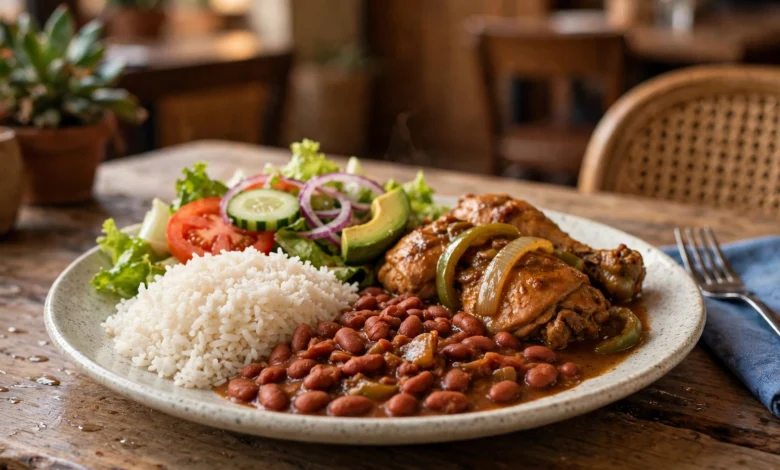
Looking for a Dominican restaurant near you? Start with la bandera dominicana — white rice, stewed red beans, a stewed meat, and salad on one plate. It is the everyday Dominican lunch, it is on nearly every Dominican menu in the United States, and how a kitchen cooks it tells you everything about the restaurant. If breakfast is being served, order mangú with los tres golpes instead: mashed green plantains with fried cheese, fried salami, and eggs.

Dominican restaurants are some of the most welcoming, generous kitchens in American dining — family-run spots where the lunch plate is heaped high, the stewed chicken falls off the bone, and the rice comes with a crispy layer at the bottom of the pot that regulars ask for by name. This guide explains what Dominican food actually is, what to order on your first visit, and how to pick a good restaurant near you — whether you live in a city with a big Dominican community like New York, Boston, Providence, or Miami, or you have just spotted one small spot in your town.
At a Glance — Dominican Restaurant Near Me
- First visit order: La bandera dominicana (rice, red beans, stewed meat, salad) with tostones on the side.
- Breakfast order: Mangú with los tres golpes (fried cheese, fried salami, eggs) and pickled red onions.
- Weekend/special order: Sancocho, the hearty seven-meat stew, often served only on certain days — ask when they make it.
- What to look for: A busy lunch crowd, stewed meats that look deep in the pot, and a menu that lists dishes like pernil, pollo guisado, and mofongo.
- Price range: Most Dominican lunch plates are modestly priced comfort food; exact prices vary by city, so check the menu board before ordering.
- Dietary notes: Plenty of rice-and-beans and vegetable options, but most signature dishes include meat; ask about vegetarian plates if you need one.
What Is Dominican Food?
Dominican cuisine comes from the Dominican Republic, the Caribbean nation that shares the island of Hispaniola with Haiti. Its cooking blends three traditions: Spanish, indigenous Taíno, and African influences — a combination that gives the food its distinctive character, as the Casa de Campo resort’s guide to Dominican dishes describes it. The result is hearty, comforting, and built around a few staples: rice, beans, plantains, root vegetables, and slow-stewed meats seasoned with sofrito, garlic, oregano, and citrus.
Unlike some Caribbean cuisines that lean heavily on heat, Dominican food is generally mild and savory rather than spicy. The flavor comes from long cooking — meats braised for hours, beans simmered until creamy, plantains fried or mashed — rather than from chili peppers. If you like Cuban or Puerto Rican food, you will recognize the family resemblance, but Dominican cooking has its own dishes, its own rhythms, and its own vocabulary.
A few words you will see on almost every menu:
- Arroz blanco — plain white rice, the base of most plates
- Habichuelas — stewed beans, usually red kidney beans
- Pollo guisado — stewed chicken, the most common meat on the lunch plate
- Pernil — slow-roasted pork shoulder
- Tostones — twice-fried green plantain slices, salty and crisp
- Maduros — sweet fried ripe plantains
- Concon — the crispy rice that sticks to the bottom of the pot; regulars ask for it specially
What Should I Order at a Dominican Restaurant for the First Time?

La Bandera Dominicana — the national plate
La bandera dominicana means “the Dominican flag,” and the dish is named for the country’s tricolor flag: white rice for the white, red beans for the red, and meat for the blue. It is the standard midday meal across the Dominican Republic and the single best first order at any Dominican restaurant. The plate typically includes white rice, stewed red beans, a stewed meat (chicken, beef, or pork), and a simple salad of lettuce, tomato, and avocado.
Why start here? Because la bandera is the dish every Dominican kitchen cooks every day. If the rice is fluffy, the beans are rich, and the stewed meat is tender, the kitchen is doing its job. If it is bland or dry, you have learned something too — and you have still had a satisfying lunch.
Mangú con los Tres Golpes — the classic breakfast
Mangú is mashed green plantain, boiled until soft and mashed smooth with some of its cooking water and a little oil, then topped with sautéed or pickled red onions. On its own it is simple comfort food. With los tres golpes — “the three hits” — it becomes a full Dominican breakfast: fried cheese (queso frito), fried salami, and eggs alongside the mangú.
Many Dominican restaurants serve mangú all day, not just at breakfast, so do not hesitate to order it in the afternoon. It is one of the most distinctive dishes in Dominican cooking, and it is the order that regulars judge a kitchen by.
Sancocho — the celebration stew
Sancocho is the dish Dominican families cook when everybody is coming over — birthdays, holidays, rainy Sundays. It is a thick, hearty stew of several meats and root vegetables: yuca, yautía, ñame, auyama (pumpkin), green plantain, and corn, all simmered in a rich broth. The famous version, sancocho de siete carnes, uses seven meats — some combination of beef, pork, chicken, goat, longaniza sausage, and smoked pork.
Because sancocho takes hours to cook, many restaurants only make it on certain days, often weekends. If you see it on the menu, order it. If you do not, ask when they serve it — and come back for it.
Mofongo, Chicharrón, and More
Once you have tried the big three, work through these:
- Mofongo — mashed fried plantains with garlic, often served with crispy pork (chicharrón) or shrimp in a savory broth. Rich, garlicky, and filling.
- Chicharrón de cerdo — crispy fried pork belly or pork chunks, often served with tostones and lime.
- Pescado frito — whole fried fish, usually served with tostones and a side salad; a coastal classic.
- Asopao — a thick, soupy rice stew, often made with shrimp or chicken.
- Empanadas — fried pastry turnovers filled with seasoned meat or cheese; a good snack or starter.
- Lambi — stewed conch in a creole sauce, a seafood-lover’s dish you will find at restaurants with a coastal menu.
What to Drink
Dominican restaurants typically serve fresh fruit juices, strong Dominican coffee, and cold Presidente beer. For something different, try morir soñando — a creamy blend of orange juice, milk, and sugar whose name translates as “to die dreaming.” It is sweet, refreshing, and unlike anything on a standard American menu.
How Do I Find a Good Dominican Restaurant Near Me?
Finding a great Dominican restaurant takes a little more effort than finding a chain, because the best ones are often small, family-run, and light on advertising. Here is how to search smartly.
Start with maps and local search
Search “Dominican restaurant near me” in Google Maps or your map app of choice and look beyond the first result. Dominican restaurants cluster in neighborhoods with Dominican communities — in New York, that means Washington Heights and the Bronx; in New England, Providence and Lawrence, Massachusetts; in Florida, parts of Miami and Orlando. If your town has a Dominican grocery store (bodega) or a Latin market, ask the staff where they eat — that recommendation is worth more than any star rating.
Read reviews the right way
When you read reviews, look for specific dish names rather than generic praise. Reviews that mention the mangu, the sancocho, the pernil, or the tostones by name are a sign that real regulars eat there. Photos of the food posted by customers are even more useful than the star count: look for generous portions, deep-colored stews, and rice that looks freshly cooked. A restaurant with a few dozen detailed reviews from local diners is usually a better bet than one with hundreds of one-line ratings.
Judge the room, not the décor
Many of the best Dominican restaurants are modest counter-service spots with plastic chairs and a steam table. That is a feature, not a warning sign. What matters is the lunch crowd: a Dominican restaurant that fills up at noon with local workers and families is doing something right. A steam table with meats that look freshly made and a line of regulars is the best recommendation a restaurant can have.
Check the menu before you go
A strong Dominican menu lists the classics — la bandera, mangú, sancocho, pernil, pollo guisado, mofongo — rather than a generic “Latin food” list. If the menu also has daily specials, that usually means the kitchen cooks in batches and sells out, which means the food is fresh. Calling ahead to ask what the special is, and whether sancocho is on today, is completely normal.
What if there is no Dominican restaurant near me?
If your area has no Dominican restaurant, you have a few options. Caribbean and Puerto Rican restaurants often carry overlapping dishes — mofongo, tostones, and stewed meats appear across the region. Latin grocery stores sometimes have a small prepared-food counter. And if you are willing to cook, mangú and la bandera are both very achievable at home: green plantains, rice, red beans, and a stewed chicken are all widely available.
What Does a Dominican Restaurant Meal Cost?
Dominican restaurants are generally affordable, everyday dining rather than special-occasion pricing. A lunch plate of la bandera at a casual counter-service spot is typically in the same range as a fast-casual meal, while a full dinner with mofongo or a seafood dish costs more. Prices vary a lot by city — a plate in Manhattan costs more than the same plate in Providence or Orlando — so we are not quoting specific prices here, because any number we printed would be wrong somewhere. Check the menu board or the menu posted online before you order, and expect generous portions: Dominican plates are famously filling, and a single lunch plate often feeds one hungry person with leftovers to spare.
Is Dominican Food Healthy?
Dominican food is built on whole, recognizable ingredients — rice, beans, plantains, root vegetables, fresh salad, and simply cooked meats — which is a strong starting point. Beans and plantains bring fiber and potassium; the salads and avocado add fresh vegetables and healthy fats. The richer side of the menu is the fried food: tostones, maduros, chicharrón, and fried cheese are delicious but calorie-dense, and the classic breakfast plate of mangú with los tres golpes is a heavy start to the day.
If you want a lighter meal, order la bandera with grilled or stewed chicken instead of fried pork, ask for extra salad, and choose steamed vegetables or a side of beans over fried plantains. Most kitchens are happy to adjust a plate. And if you are watching sodium, ask about the seasoning — Dominican stews are savory and well-salted by tradition.
Dominican Restaurant Etiquette: What to Know Before You Go
- Order at the counter at most casual spots; table service is more common at larger sit-down restaurants.
- Lunch is the main event. Many Dominican restaurants do their best cooking at midday, when the stews are fresh and the rice is just made.
- Ask questions. “What is good today?” is a great opening line — staff are usually happy to explain a dish or recommend a plate.
- Tip as you would anywhere. Standard American tipping applies at sit-down restaurants; at counter-service spots, tipping is appreciated but not expected.
How Is Dominican Food Different from Puerto Rican or Cuban Food?

These cuisines are cousins, and menus overlap — all three love rice, beans, plantains, and slow-cooked pork. But there are real differences. Mangú is distinctly Dominican: Puerto Rico’s mofongo is made from fried plantain mashed with garlic and pork cracklings, while Dominican mangú is made from boiled green plantain mashed smooth, a softer and milder dish. La bandera is the Dominican national plate in a way no single plate defines Puerto Rican or Cuban cooking. Sancocho exists across the Caribbean and Latin America, but the Dominican seven-meat version is its own tradition. And Dominican seasoning leans on oregano, garlic, and citrus more than on the cumin-heavy profile of Cuban cooking. If you enjoy one of these cuisines, you will enjoy the others — but each rewards attention on its own terms.
Finding Local Services: The Same Approach Works Everywhere
The approach in this guide — search locally, read reviews for specific details, judge by the lunch crowd, and ask locals — works for any neighborhood service, not just restaurants. If you are building a list of trusted local spots, our guide to finding a good black barbershop near you uses the same method: look for detailed reviews, real photos, and a busy shop full of regulars.
Frequently Asked Questions
What is the most popular dish at a Dominican restaurant?
La bandera dominicana — white rice, stewed red beans, a stewed meat, and salad — is the most popular everyday dish. It is the national lunch plate, it is on nearly every Dominican menu, and it is the best first order for a newcomer.
What is mangú?
Mangú is mashed green plantain, boiled until soft and mashed smooth, traditionally topped with sautéed or pickled red onions. It is the classic Dominican breakfast, usually served with los tres golpes: fried cheese, fried salami, and eggs.
What is sancocho?
Sancocho is a hearty Dominican stew made with several meats and root vegetables such as yuca, yautía, ñame, pumpkin, plantain, and corn. The seven-meat version, sancocho de siete carnes, is a celebration dish often served only on certain days.
Is Dominican food spicy?
Generally no. Dominican food is savory and well-seasoned with garlic, oregano, sofrito, and citrus, but it is not built around chili heat the way some other cuisines are. Most dishes are mild, and hot sauce is usually available on the side if you want it.
What is the difference between mangú and mofongo?
Mangú is Dominican: boiled green plantain mashed smooth, served soft, usually at breakfast. Mofongo is Puerto Rican: fried plantain mashed with garlic and pork cracklings, denser and richer, usually served as a main dish with meat or seafood. Both are plantain-based, but they are different dishes.
Do Dominican restaurants have vegetarian options?
Many do. Rice and beans, tostones, maduros, salads, and steamed vegetables are widely available, and some restaurants offer a vegetarian plate. Because most signature dishes include meat, it is worth calling ahead or asking the staff about vegetarian options when you arrive.
Sources and further reading: dish descriptions verified against Casa de Campo’s guide to Dominican dishes and the Dominican Republic’s official tourism site, GoDominicanRepublic.com. Prices and menus vary by restaurant and city — check the menu before ordering. As of November 2026.
