

The short answer: “Have You Ever Seen the Rain” is a 1971 song by Creedence Clearwater Revival, written by John Fogerty for the band’s sixth album, Pendulum. Its lyrics use rain falling on a sunny day as a metaphor for success shadowed by sadness — and Fogerty has said plainly that the song is about Creedence Clearwater Revival breaking up at the height of its fame. It was released as a single in January 1971 and reached No. 8 on the US Billboard Hot 100.

If you came here for the lyrics, here is what you need to know first: the song’s most famous line asks, “Have you ever seen the rain comin’ down on a sunny day?” — and the rest of the song is built around that one image. Below you will find what each part of the song means, the true story behind it, why so many people wrongly think it is about the Vietnam War, and where you can listen to it today. As of November 2026, it remains one of the most-streamed rock songs of its era.
At a Glance: “Have You Ever Seen the Rain”
- Song: “Have You Ever Seen the Rain”
- Artist: Creedence Clearwater Revival (CCR)
- Written by: John Fogerty, the band’s lead singer, lead guitarist and principal songwriter
- Album: Pendulum, the band’s sixth studio album, released in December 1970
- Single release: January 1971
- Peak chart position: No. 8 on the US Billboard Hot 100
- Meaning: Rain falling on a sunny day is a metaphor for a band at the peak of success while falling apart inside; Fogerty has said the song is “literally about Creedence breaking up”
- Common misconception: It is often assumed to be about the Vietnam War — Fogerty has repeatedly said it is not
- Legacy: MusicRadar reported in 2025 that the song had passed two billion streams
What Do the Lyrics of “Have You Ever Seen the Rain” Mean?
The meaning of “Have You Ever Seen the Rain” is unusually well documented, because John Fogerty has explained it himself, more than once, in his own words. The song is about the slow, painful breakup of Creedence Clearwater Revival — a band that was, by every outside measure, at the very top of the world.
The central image is a “sunshower”: rain falling while the sun is still shining. Fogerty described the setting to Guitar Player magazine like this: there could be a blue sky overhead, but far away, out of sight, storm clouds are gathering, and something in the upper atmosphere pushes the rain over until it falls on you — even though you look up and see a clear sky. That was exactly how he saw his band in late 1970: Creedence was rising “in the bluest sky you ever saw,” yet everybody in the group was grumbling, unhappy and miserable. He could not understand it, and that confusion is what caused him to write the song.
The opening lines set the mood before the famous question arrives. “Someone told me long ago, there’s a calm before the storm” — a warning that trouble is coming even when everything looks peaceful. The verses that follow are full of that same unease: “Yesterday, and days before, sun is cold and rain is hard.” Nothing in the song describes a literal storm. Every line is about the feeling of knowing something good is ending while it still looks fine from the outside.
The most personal layer of the lyrics concerns Fogerty’s older brother, Tom Fogerty, the band’s rhythm guitarist. Tom had effectively founded the group in its earliest incarnation, and by the time Pendulum was being recorded he felt sidelined: John wrote the songs, sang them, and controlled the band’s sound, while Tom’s creative role had shrunk to almost nothing. In early 1971, after Pendulum was finished, Tom left the group. The other two members, bassist Stu Cook and drummer Doug Clifford, were also pressing for a more democratic say in the songwriting. Fogerty later said the song feels as though it is spoken directly to his brother — an imploring, heartfelt attempt to make sense of a family and a band coming apart at the same time.
That is why the song sounds the way it does. It is a mid-tempo country-rock track, warm and melodic on the surface, but the vocal is strained and the mood is unmistakably sad. The contrast is the point: a sunny day with rain falling on it.
Is “Have You Ever Seen the Rain” About the Vietnam War?
No — although this is one of the most persistent misunderstandings in rock history, and it is easy to see why it took hold. When the single came out in January 1971, the Vietnam War was at its height, and Creedence was already famous for “Fortunate Son,” one of the era’s defining protest songs. Listeners heard rain falling from a clear sky and imagined bombs dropping from planes. For a generation of soldiers coming home, the song took on a second life as a song about loss and about returning to a country that looked the same but felt different.
Fogerty, however, has been clear across the decades — including in his autobiography, Fortunate Son: My Life, My Music — that this particular song was not about the war. It was about the band. The rain was the looming departure of his brother and the inevitable collapse of the group he had built. As he put it in a 2025 interview with Rick Beato, the song is “literally about Creedence breaking up.”
That does not make the Vietnam reading wrong as a matter of listening. Once a song is released, it belongs to its listeners, and the timing of its release made the war association almost unavoidable. But if you want the songwriter’s own answer, the meaning is the breakup of Creedence Clearwater Revival — not a protest song, and not a war song.
When Was “Have You Ever Seen the Rain” Released?
“Have You Ever Seen the Rain” was written by John Fogerty and recorded by Creedence Clearwater Revival for Pendulum, the band’s sixth studio album, released in December 1970. The song was issued as a single in January 1971, and it peaked at No. 8 on the US Billboard Hot 100.
That chart position tells a story of its own. By CCR’s standards it was something of a disappointment — the band had piled up a run of Top Five singles before it — but it still confirmed the group’s commercial power at a moment when the group itself was already fracturing. Pendulum was recorded at Wally Heider Studios in San Francisco in November 1970, and the sessions were tense: before recording began, the band demanded a meeting, and the internal politics that had been building for years finally came to the surface.
The sound of the track was also a small departure. It was reportedly inspired by Booker T. & the M.G.’s, who had opened for Creedence at recent live shows, and Fogerty’s admiration for Booker T. Jones’s Hammond organ playing led him to use the instrument on several Pendulum tracks, including this one. The result is cleaner and less swampy than the band’s earlier records like Bayou Country — a polish that, fittingly, mirrors the song’s theme of a bright surface over trouble underneath.
What Happened to Creedence Clearwater Revival After the Song?
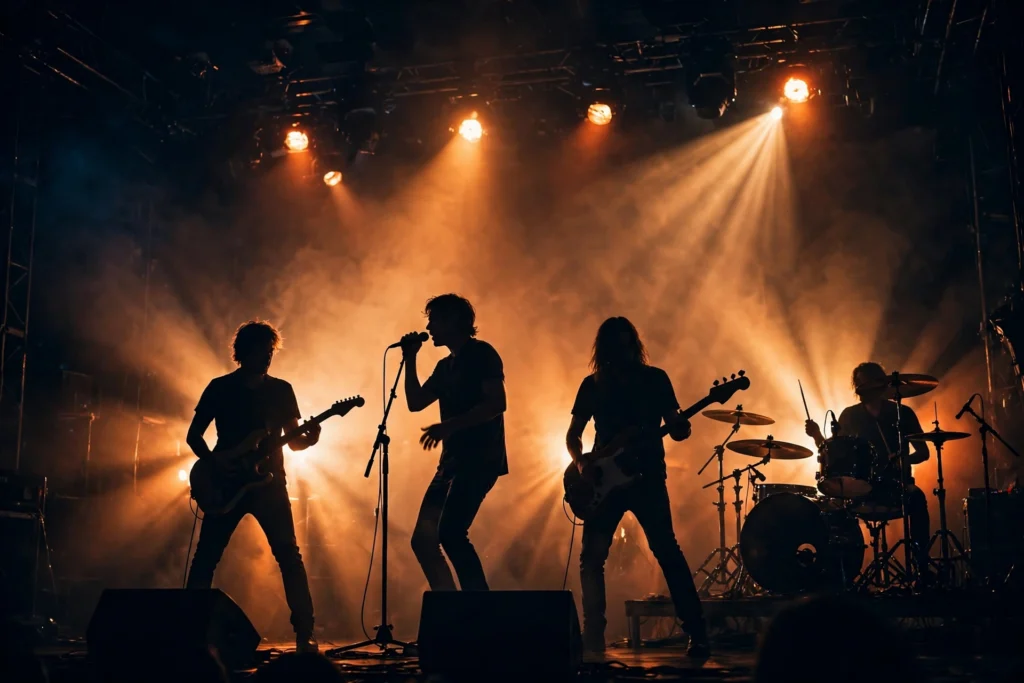
Almost everything the song predicted came true, and quickly. Shortly after the single was released in early 1971, Tom Fogerty left the group. Creedence carried on as a trio and recorded one more album, Mardi Gras, released in 1972 — their seventh and final album — before the band broke up altogether later that year.
The story did not end there. John Fogerty entered a decades-long legal battle with Fantasy Records and its owner, Saul Zaentz, over the rights to the band’s songs. Fogerty famously gave away his publishing rights in order to get out of his contract, which meant he did not own his own songs — including “Have You Ever Seen the Rain” — for many years. That long dispute is a large part of why the song’s sadness feels so complete: the breakup it described was followed by years of estrangement and litigation.
Over time, the meaning of the song has shifted for Fogerty himself. He has said that the song was originally written about a very sad thing going on in his life, but that he refuses to be sad about it now — because today the song reminds him of his daughter, Kelsy, and every time he sings it he thinks about her and rainbows. It is a rare thing for a song about a breakup to end up, in its writer’s mind, as a song about his child. That second meaning is part of why the song still lands so powerfully with new listeners: it is, at its core, a song about the human condition — about good times and bad times turning in a circle, as the lyric puts it, “Through the circle, fast and slow, I know, it can’t stop, I wonder.”
Why Is “Have You Ever Seen the Rain” Still So Popular Today?

More than fifty years after its release, “Have You Ever Seen the Rain” is still one of the most-played rock songs in the world. MusicRadar reported in 2025 that it had passed two billion streams, a figure that puts a 1971 album track in the same company as modern pop hits. Its staying power comes from several things at once: a melody that is simple enough to sing along to on first hearing, a vocal performance that sounds genuinely hurt rather than performed, and a central image — rain on a sunny day — that anyone can understand without knowing a word of the backstory.
The song also benefits from being endlessly re-discoverable. It turns up on classic-rock radio, on film and television soundtracks, in cover versions by artists across genres, and in the playlists of listeners who were born decades after CCR broke up. Each new audience tends to hear it first as a beautiful, slightly mysterious song about the weather — and then, once they learn what Fogerty meant by it, as something much sadder and more specific. That double life is exactly what makes it last.
Where Can You Listen to “Have You Ever Seen the Rain”?
As of November 2026, the song is available on every major streaming service, including Spotify, Apple Music, Amazon Music and YouTube Music, usually as part of the Pendulum album or on Creedence Clearwater Revival’s greatest-hits collections. The official Creedence Clearwater Revival YouTube channel also carries the track, and the song is widely available on CD and vinyl reissues of Pendulum. If you want the full picture, listen to the whole Pendulum album in order: it is a moodier, more experimental record than the band’s earlier work, and it shows a great band trying to find a new identity while its old one is burning down.
Frequently Asked Questions
Who wrote “Have You Ever Seen the Rain”?
John Fogerty wrote Have You Ever Seen the Rain. He was Creedence Clearwater Revival’s lead singer, lead guitarist and principal songwriter, and he wrote the song during the recording of the band’s sixth album, Pendulum, in late 1970.
What is “Have You Ever Seen the Rain” about?
The song is about Creedence Clearwater Revival breaking up. John Fogerty has said it is “literally about Creedence breaking up” — the “rain comin’ down on a sunny day” is a metaphor for a band at the peak of success while its members were unhappy and falling apart. It is not, as is often assumed, a song about the Vietnam War.
When was “Have You Ever Seen the Rain” released?
The song appeared on the album Pendulum, released in December 1970, and was issued as a single in January 1971. It peaked at No. 8 on the US Billboard Hot 100.
Is “Have You Ever Seen the Rain” about the Vietnam War?
No. Although many listeners associate it with the Vietnam War because of its 1971 release and CCR’s protest-song reputation, John Fogerty has repeatedly clarified — including in his autobiography Fortunate Son: My Life, My Music — that the song was written about the internal turmoil and impending breakup of Creedence Clearwater Revival.
What album is “Have You Ever Seen the Rain” on?
It is on Pendulum, Creedence Clearwater Revival’s sixth studio album, released in December 1970. The band’s next and final album was Mardi Gras (1972), recorded as a trio after Tom Fogerty left the group.
How popular is “Have You Ever Seen the Rain” today?
Very popular. MusicRadar reported in 2025 that the song had passed two billion streams, and it remains a staple of classic-rock radio and streaming playlists more than fifty years after its release.
More local guides on usapost.co.uk: if you are searching for services near you, see our guide to finding black barbershops near me and our guide to jewelry repair near me.
